1996-01-20
Avistamiento Inicial
Múltiples testigos en Varginha, Brasil, informan haber visto una nave extraña volando bajo sobre la ciudad durante el día. Los testigos describen patrones de vuelo erráticos y apariencia inusual.
1996-01-20
Encuentro con la Criatura
Tres jóvenes encuentran una criatura extraña en un terreno baldío. Describen un ser bípedo con piel marrón y aceitosa, grandes ojos rojos y tres protuberancias en la cabeza. La criatura parecía herida o angustiada.
1996-01-20
Respuesta de los Bomberos
El Cuerpo de Bomberos de Varginha recibe llamadas sobre un "animal extraño" en la zona. Los bomberos habrían llegado al lugar y participado en una operación de captura, aunque los registros oficiales niegan cualquier despliegue.
1996-01-20
Respuesta Militar
Bomberos locales y personal militar habrían llegado al lugar. Los testigos relatan haber visto camiones militares y una operación de recogida organizada.
1996-01-20
Sospechas de Traslado Hospitalario
Los testigos relatan haber visto vehículos militares transportando carga cubierta hacia el Hospital Regional y el Hospital Humanitas. Los administradores de los hospitales niegan haber recibido pacientes o materiales inusuales, pero múltiples testigos independientes describen una presencia de seguridad inusual en ambos centros.
1996-01-22
Captura de una Segunda Criatura
Surgen informes de una segunda criatura capturada por personal militar cerca del Zoológico de Varginha. Múltiples testigos independientes describen haber visto operaciones militares en la zona.
1996-01-23
Comienzan los Interrogatorios a Testigos
Surgen informes de personal militar entrevistando a testigos y pidiéndoles firmar acuerdos de confidencialidad. Varios testigos afirman haber sido presionados para alterar o retirar sus relatos del encuentro.
1996-02-15
Muerte de un Oficial Militar
El cabo de la Policía Militar Marco Eli Chereze muere en circunstancias misteriosas tras haber participado supuestamente en la operación de captura. Causa oficial: infección bacteriana.
1996-04-21
Negación Oficial
El Ejército Brasileño emite una negación oficial de cualquier operación de recogida de OVNI o criatura en Varginha. Sin embargo, los testigos mantienen sus relatos y varios se niegan a retractarse.
1996-05-12
La Cobertura Mediática se Intensifica
Los medios nacionales brasileños inician una amplia cobertura del incidente de Varginha. Las entrevistas televisivas con las principales testigos, incluidas las tres jóvenes, llevan el caso a la atención nacional y abren el debate público.
2004-09-01
Contexto Histórico de Inteligencia Extranjera
La desclasificación de documentos de la CIA de la era de la Guerra Fría revela un interés histórico de agencias extranjeras de inteligencia en fenómenos OVNI sudamericanos, estableciendo un precedente de cooperación interagencias en incidentes extraordinarios.
2020-01-20
Desarrollo de Terminal Varginha
Comienza el desarrollo de la narrativa ficticia, utilizando el caso histórico de Varginha como inspiración para una experiencia interactiva que explora el secretismo gubernamental, la credibilidad de los testigos y la construcción de la verdad a partir de relatos contradictorios.
The Varginha UFO Incident
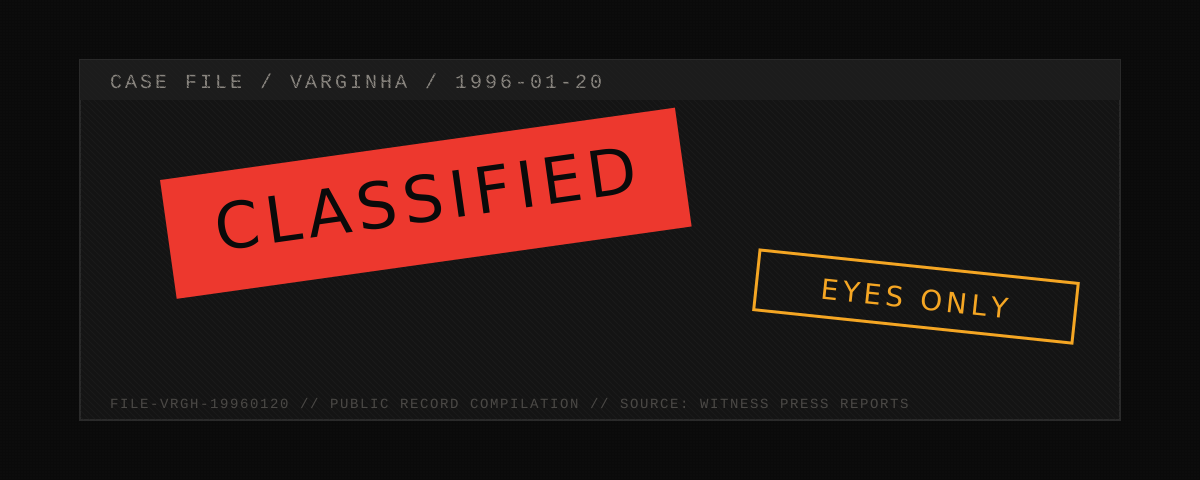
On January 20, 1996, the small city of Varginha in southeastern Brazil became the center of one of the most compelling and controversial UFO cases in modern history. What began as scattered reports of unusual aerial phenomena quickly escalated into accounts of creature encounters, military operations, and allegations of an official cover-up that persist nearly three decades later.
The Varginha incident stands apart from many UFO cases due to the sheer number of witnesses, the consistency of their descriptions, and the reported involvement of Brazilian military and civilian authorities. While skeptics point to the lack of physical evidence and the possibility of mass hysteria or misidentification, the case remains a subject of serious investigation by researchers worldwide [ufo-com-br] [openminds-varginha].
This account examines the publicly reported events, witness testimonies, official responses, and the ongoing debate surrounding what happened in Varginha. It is important to note that Terminal Varginha is a work of fiction inspired by these historical reports, not a documentary recreation or factual account of the incident.
The night of January 20, 1996
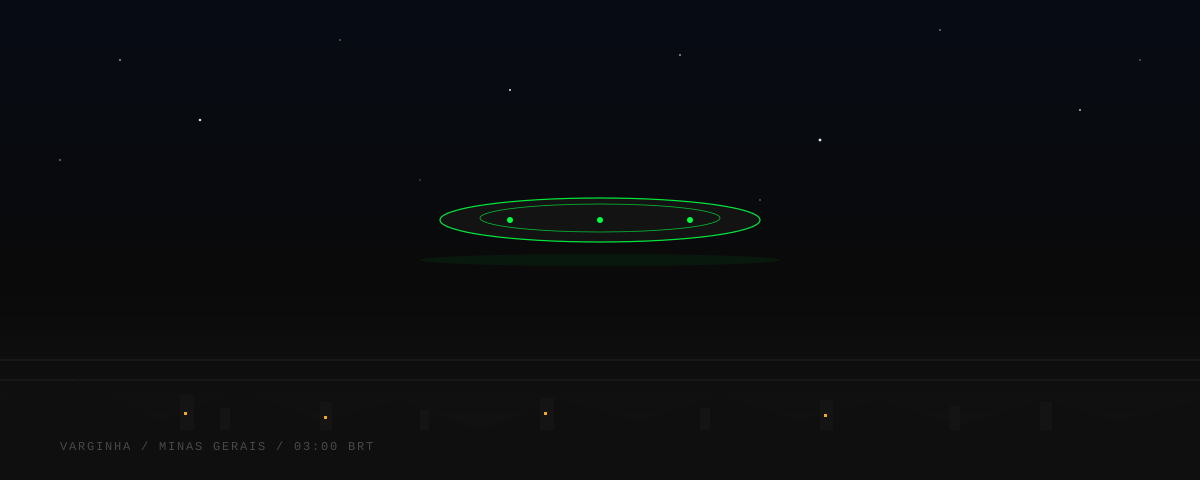
The events of January 20, 1996, unfolded in multiple locations across Varginha, a city of approximately 120,000 residents in the state of Minas Gerais. According to witness reports compiled by Brazilian UFO researchers, unusual aerial activity was observed in the early morning hours, with multiple residents reporting a cigar-shaped or oval craft flying at low altitude over residential neighborhoods [ufo-com-br].
Witnesses described the object as displaying erratic flight patterns inconsistent with conventional aircraft, moving silently through the sky and emitting no visible exhaust or engine noise. Some reports indicated the craft appeared to be in distress or descending rapidly, though these accounts vary significantly in detail and reliability.
The sightings occurred during daylight hours, which researchers note is unusual for UFO reports and potentially adds credibility to witness accounts. However, skeptics point out that daylight observations are also more susceptible to misidentification of conventional aircraft, weather balloons, or atmospheric phenomena [nicap].
What transformed these UFO sighting reports into an extraordinary case was what allegedly happened next on the ground. By afternoon, reports began to emerge of something far more disturbing than aerial lights: encounters with living creatures unlike anything documented in zoological records.
The creatures
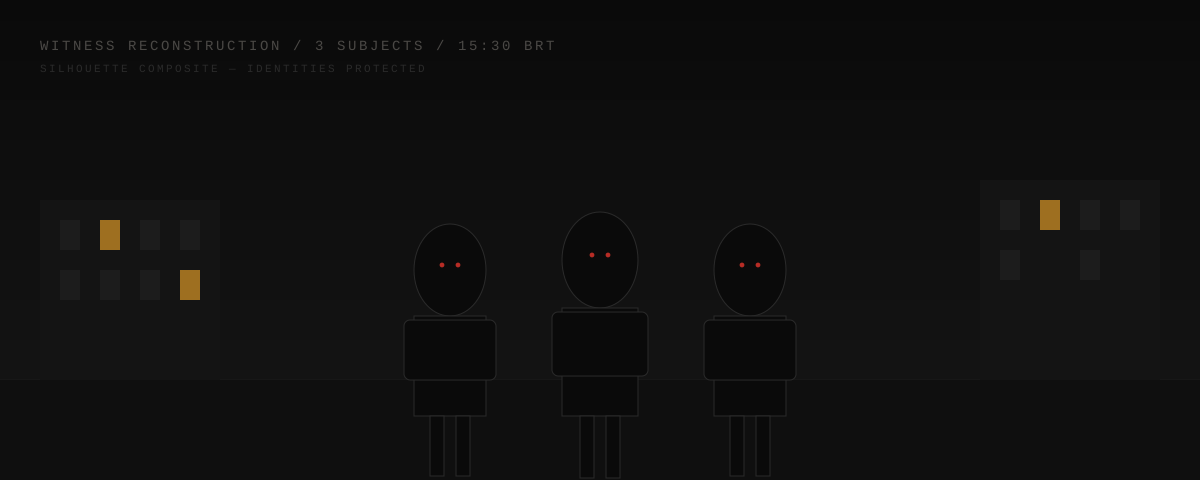
The most sensational and controversial aspect of the Varginha incident involves the reported encounters with strange beings. The primary witnesses were three young women—Liliane Fátima Silva, Valquíria Aparecida Silva, and Kátia Andrade Xavier—who were walking home from work around 3:30 PM on January 20 when they encountered what they described as a crouching creature in a vacant lot near Rua Benevenuto Bras Viera [ufo-com-br].
The witnesses provided remarkably consistent descriptions of the being: approximately four feet tall, bipedal, with brown oily skin that appeared slick or wet. Most distinctively, they reported large red eyes and three protruding bumps or horns on the top of its head. The creature appeared to be injured or in distress, making no aggressive movements toward the witnesses [openminds-varginha].
The three women fled the scene in terror and reported their encounter to family members and local authorities. Their accounts were subsequently corroborated by other witnesses who reported similar beings in different locations around the city that same day and in the following days.
Additional reports came from residents near the Varginha Zoo, military personnel, and firefighters who allegedly participated in capture operations. However, many of these secondary witnesses have not spoken publicly or have retracted their statements under circumstances that researchers find suspicious [ufo-com-br].
The description of the creatures has led to various theories about their origin and nature. Some researchers suggest extraterrestrial beings, while skeptics have proposed explanations ranging from mentally disabled individuals to misidentified animals such as the South American coati. The consistency of the descriptions across multiple independent witnesses remains a point of contention between believers and skeptics.
The military response
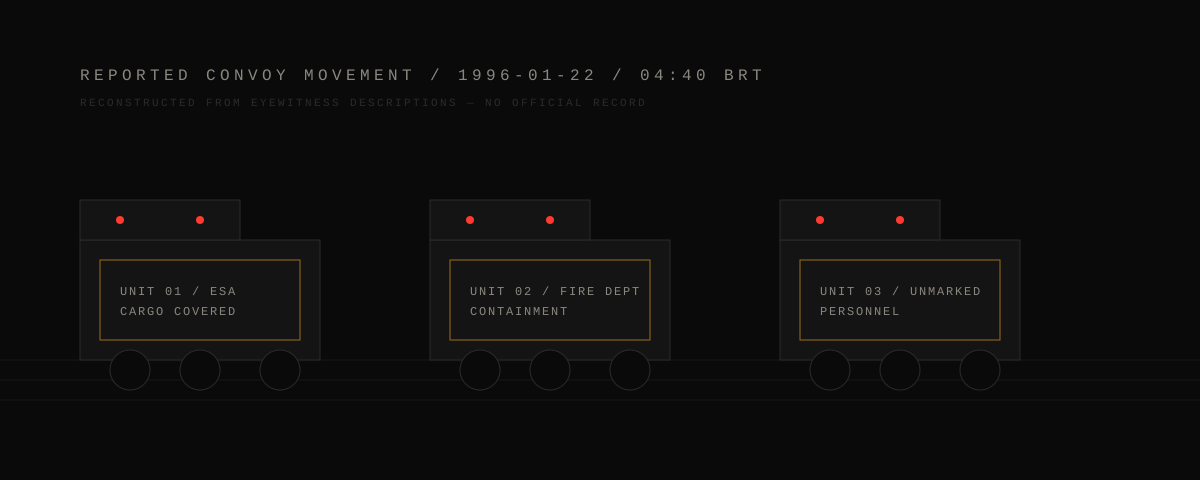
Perhaps the most intriguing aspect of the Varginha case is the reported involvement of Brazilian military and civilian authorities in what witnesses describe as an organized capture and recovery operation. Multiple residents reported seeing military trucks, Fire Department vehicles, and personnel from the Escola de Sargentos das Armas (ESA) military school in the hours and days following the initial creature sightings [openminds-varginha].
According to witness accounts, the first capture allegedly occurred in the afternoon of January 20, when Fire Department personnel responded to reports of a "strange animal" in the area where the three young women had their encounter. Firefighters allegedly captured one creature using nets and transferred it to regional hospital Humanitas, though hospital administrators have denied any such event occurred [ufo-com-br].
A second capture allegedly took place on January 22 near the Varginha Zoo, involving military personnel from the ESA. Witnesses reported seeing military trucks with covered cargo leaving the area in the early morning hours. The Brazilian Army has consistently denied any involvement in creature captures or UFO-related operations in Varginha [openminds-varginha].
The alleged military response included the establishment of roadblocks, the cordoning off of certain areas, and the presence of high-ranking officers not normally stationed in the region. Researchers have documented over 40 witness accounts of unusual military activity during this period, though many witnesses refuse to speak publicly citing fears of retaliation [ufo-com-br].
What makes these reports particularly compelling to investigators is that many witnesses had no prior interest in UFO phenomena and had no apparent motive to fabricate accounts that could subject them to ridicule. However, the lack of photographic evidence, official documentation, or physical proof remains a significant obstacle to verification.
The witnesses
The credibility of witnesses is central to evaluating the Varginha incident. Unlike many UFO cases that rely on anonymous or questionable sources, the Varginha case includes multiple named witnesses who have maintained their accounts consistently over nearly three decades.
The three primary witnesses—Liliane, Valquíria, and Kátia—were young working-class women with no history of seeking publicity or making extraordinary claims. In interviews conducted by Brazilian researchers and international UFO investigators, all three women have consistently maintained the accuracy of their account, despite facing ridicule and skepticism from segments of the media and public [ufo-com-br] [openminds-varginha].
Additional witnesses include military personnel, though most have spoken only under conditions of anonymity. Some researchers claim to have interviewed soldiers and officers who participated in the alleged capture operations, but the unwillingness of these sources to go on record significantly undermines the evidentiary value of their accounts.
Medical personnel from local hospitals have also been cited as witnesses, with reports suggesting that at least one creature was taken to regional hospital facilities for examination. However, hospital administrators and most medical staff have denied these accounts, and no medical records or documentation has emerged to support the claims [ufo-com-br].
The reluctance of many potential witnesses to speak publicly is interpreted differently by believers and skeptics. Researchers argue this reflects legitimate fears of professional retaliation and social stigma, particularly for military personnel who might face charges for breaking confidentiality agreements. Skeptics counter that the absence of willing witnesses with verifiable credentials suggests the accounts may be unreliable or fabricated [nicap].
The cover-up
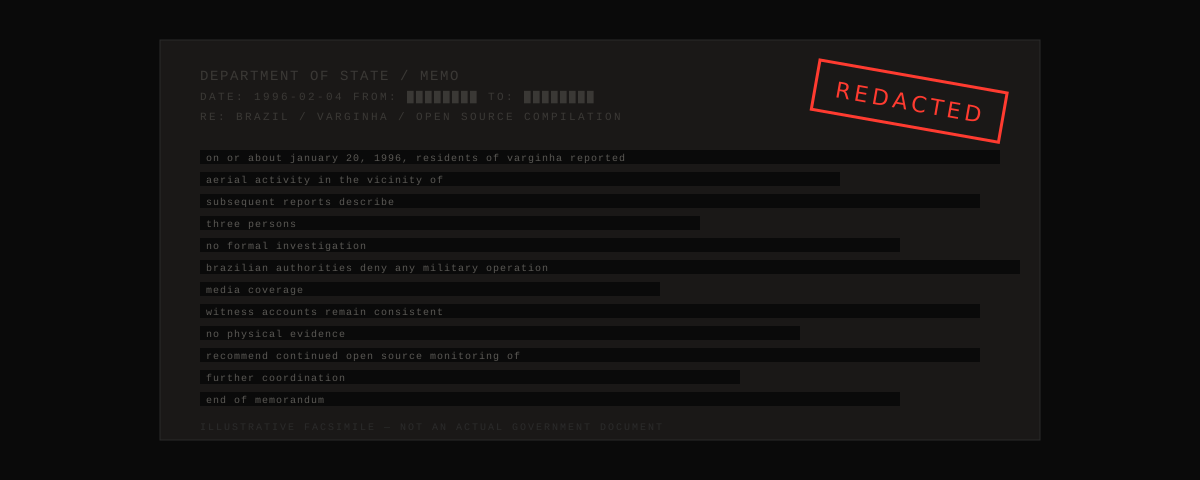
Allegations of an official cover-up are central to how the Varginha incident is understood by UFO researchers. Proponents argue that the Brazilian military, possibly in coordination with United States intelligence agencies, orchestrated a systematic effort to suppress evidence and silence witnesses [openminds-varginha].
Evidence cited for a cover-up includes the death of military police officer Marco Eli Chereze on February 15, 1996, approximately three weeks after the alleged creature captures. Chereze's family reported that he participated in the capture operation and subsequently fell ill with a mysterious infection. Official records attribute his death to bacterial septicemia, but researchers note the unusual severity and rapid progression of his illness [ufo-com-br].
The family's claims of military involvement in suppressing information about Chereze's role in the incident have added fuel to cover-up theories. However, medical professionals point out that bacterial infections can indeed progress rapidly and lethally, and there is no direct evidence linking his death to contact with any extraterrestrial being.
Other elements cited as evidence of a cover-up include the reported confiscation of video footage from security cameras in the area, pressure on witnesses to retract their statements, and the transfer of military personnel who allegedly participated in the operations. The Brazilian military's blanket denial of any UFO-related activities in Varginha is viewed by researchers as inconsistent with the volume of witness testimony [openminds-varginha].
Skeptics argue that the lack of documentary evidence, photographic proof, or physical specimens suggests there may be nothing to cover up. They point out that in the age of ubiquitous cameras and communications technology, the absence of any concrete evidence is itself telling. The reported military operations, if they occurred at the scale described, would likely have generated some form of verifiable documentation [nicap].
Declassified documents
The role of official documents in the Varginha case is complex and often misunderstood. While declassified files from United States agencies like the CIA and FBI demonstrate that government entities have indeed investigated UFO phenomena, there are no declassified documents specifically confirming the events reported in Varginha [cia-ufo-reading-room] [fbi-vault-ufo].
The CIA's UFO reading room contains thousands of pages of declassified documents related to UFO investigations conducted during the Cold War era. These files establish that intelligence agencies took certain UFO reports seriously and investigated them through formal channels. However, the vast majority of cases were ultimately attributed to misidentifications, natural phenomena, or classified military aircraft [cia-ufo-reading-room].
Brazilian authorities have released limited documentation related to UFO phenomena more broadly. In 2010, the Brazilian Air Force declassified some UFO-related files following pressure from researchers and transparency advocates. However, these releases did not include specific documentation of the Varginha incident, which the military continues to deny occurred [ufo-com-br].
The absence of official documentation is interpreted differently depending on one's perspective. Researchers argue this demonstrates the effectiveness of the alleged cover-up, while skeptics suggest it indicates the events did not occur as reported. The burden of proof remains a central point of contention.
It is important to note that government documentation of UFO phenomena, while demonstrating official interest in the subject, does not constitute evidence for extraterrestrial visitation. Most declassified cases have conventional explanations, and the existence of government UFO programs does not validate any specific incident claims [cia-ufo-reading-room] [fbi-vault-ufo].
What scientists say
The scientific community's response to the Varginha incident has been largely skeptical, though a small number of researchers have argued the case deserves serious investigation. The absence of physical evidence, biological specimens, or verifiable photographs makes scientific analysis challenging.
Zoologists who have examined the witness descriptions note similarities to known animals, particularly the coati (Nasua nasua), a raccoon-like mammal native to Brazil. The coati's appearance, particularly when wet or ill, could potentially explain some aspects of the creature descriptions. However, this explanation struggles to account for the reported bipedal locomotion, the size discrepancies, and the distinctive red eyes described by witnesses [nicap].
Psychologists and sociologists have studied the Varginha case as an example of mass hysteria or social contagion, where initial reports influence subsequent witness accounts, creating a self-reinforcing cycle of extraordinary claims. This model has been used to explain other famous UFO cases and religious apparition events. However, critics of this explanation note that many Varginha witnesses reported their experiences independently before media coverage could have influenced their perceptions [nuforc].
Atmospheric scientists and aviation experts have reviewed the aerial sighting reports and generally attribute them to conventional aircraft, weather phenomena, or astronomical objects seen under unusual conditions. None of the aerial observations included radar confirmation or physical evidence that would compel scientific acceptance of an extraordinary explanation [nicap].
The scientific consensus, to the extent one exists, is that the Varginha case lacks the evidence necessary to support extraordinary claims. The principle that extraordinary claims require extraordinary evidence remains the standard applied by mainstream science to UFO reports, including Varginha [nuforc].
The connection to Terminal Varginha
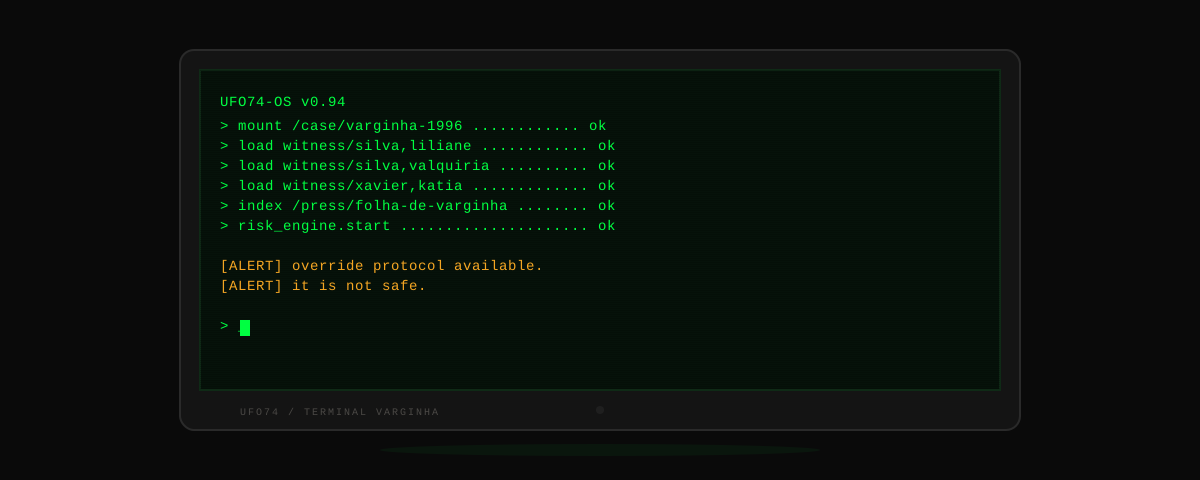
Terminal Varginha is a work of interactive fiction explicitly inspired by the historical reports surrounding the Varginha incident. It is not a documentary, simulation, or factual recreation of events. The game explores themes of government secrecy, witness credibility, and the tension between official narratives and public accounts through the lens of speculative storytelling.
The developers drew inspiration from the structure of actual declassified government documents, witness report formats used by organizations like NUFORC and NICAP, and the aesthetic of Cold War-era classified materials [cia-ufo-reading-room] [fbi-vault-part-one] [nuforc] [nicap]. Historical U.S. intelligence interest in Brazilian UFO phenomena, documented in declassified CIA files, provided additional context for the game's fictional inter-agency dynamics [cia-brazil-document-search]. The goal was to create an immersive experience that captures the atmosphere of conspiracy and uncertainty surrounding cases like Varginha without making claims about what actually occurred.
Terminal Varginha includes fictional documents, fabricated witness testimonies, and invented evidence designed to support the game's narrative. None of the specific documents, photographs, or files presented in the game are authentic, even when they reference real locations, dates, or general circumstances from the historical Varginha incident.
The game's designers believe that interactive fiction can explore historical mysteries and cultural phenomena in ways that traditional media cannot. By placing players in the role of investigators examining classified materials, Terminal Varginha aims to provoke questions about how we evaluate evidence, determine credibility, and construct narratives from incomplete information.
It is crucial for players to understand that engaging with Terminal Varginha's fictional materials does not constitute research into the actual Varginha incident. The real case remains controversial and unresolved, with passionate advocates and skeptics maintaining fundamentally incompatible interpretations of the evidence. The game exists in the space of speculation and imagination, not historical documentation.
Source notes
The research and development of Terminal Varginha drew upon multiple public sources documenting UFO phenomena, government investigation protocols, and the specific details of the Varginha incident as reported in UFO research literature. The following sources informed the game's narrative structure and aesthetic approach:
[cia-ufo-reading-room] - The CIA's declassified UFO files provided templates for document classification levels, redaction styles, and the formal language used in government intelligence reports. These authentic documents established the visual and linguistic conventions the game seeks to emulate.
[fbi-vault-ufo] - FBI investigative files on UFO phenomena offered examples of how federal agencies documented witness testimonies, inter-agency communications, and field investigation reports. The bureaucratic style and formatting influenced the game's fictional document design.
[ufo-com-br] - Brazilian UFO research organizations have compiled the most comprehensive Portuguese and English language accounts of the Varginha incident, including witness interviews, timeline reconstructions, and analysis of the alleged military response. These materials formed the factual foundation upon which the game's fictional narrative was constructed.
[nuforc] - The National UFO Reporting Center's database and standardized report formats provided models for how civilian UFO sighting reports are structured and categorized. The game's fictional witness reports adopt similar conventions for authenticity.
[nicap] - The National Investigations Committee on Aerial Phenomena's historical case files demonstrated how civilian researchers approached UFO investigation during the Cold War era, balancing skepticism with open inquiry. This perspective influenced how the game presents competing interpretations of evidence.
[openminds-varginha] - Investigative journalism on the Varginha case, including interviews with witnesses and analysis of military response patterns, provided narrative details and helped establish the timeline of reported events that the game references.
[cia-brazil-document-search] - Declassified CIA documents related to UFO activity and intelligence operations in Brazil during the Cold War era provided historical context for U.S. intelligence interest in South American phenomena, informing the game's fictional inter-agency dynamics.
[fbi-vault-part-one] - FBI's comprehensive UFO investigation archive offered detailed examples of field investigation procedures, witness interview formats, and evidence documentation standards that shaped the game's fictional case file structure.
All prose, analysis, and conclusions in this editorial are original work. No third-party content has been reproduced without attribution. Direct quotations from public domain government documents are minimal and used for illustrative purposes only.